
The Workshop Where It Began Five Years Ago: Notes from Reggie McNeal
CTW Conf: Right Here, Right Now – Alan Hirsch

Alan Hirsch, one of the real godfathers of the missional movement, spoke at the conference. He talked about how the church is no longer a privileged voice. “Now we get to work from the margins. We have to live an ethical life and get credibility again.”
He is hopeful that there will be a fundamental shift in the church. He pointed out that we still think about church in Constantinian forms, but the early church was far from privileged.
The early church was not an institution, but a movement. There were different levels of “church”:
Local: Community of God, usually meeting in smaller groups.
City: Church in Ephesus, etc, God’s people in a certain zone
Region: e.g. the Church across the Roman empire. A force, a movement.
Universe: identity
We want to be a missional, incarnational movement. Everyone has to be involved in this, not just clergy. Every believer is an agent of the kingdom. Every believer is a church planter. Every church is a church-planting church. Every person has the potential for transformation of Kingdom.
First job of a leader: Define how people see themselves in that organization.
You’ve got to dream it up. See the people, full of potential. Human beings have real changing power.
We treat money as if it’s an independent power. When issues of politics come up, hatred comes up. You can see how civil wars could happen around that stuff.
In any given system, there’s a distribution curve of resisters to early adopters.
2.5% are innovative.
13.5% early adopters
So all you need is 16% for an idea to be inevitable in that population.
In your churches, there are at least 5-10% of people who, re: missional issues, would say, “This is what I’ve always believed.” Allow for innovation.
We are meant to be a movement. An expansive, social force.
K à M à E
Kingdom informs missiology, informs ecclesiology
“The mission has a church.” Sent and sending. Missional determines God. “It’s not some fetish word, ‘missional’ is intrinsic to our activity in the world.”
You see what God is doing, and you join with God.
The church emerges from mission. Not the other way.
There is a great yearning to be lifted – how does it manifest? Football, money, etc. As missionaries, look in the “wrong places.”
As a missionary, go to the movies. See what is informing the culture, the mythos. Study the idolatry of a culture. All mission is post-cultural.
“Go to the third places. Where people hang out in their spare time.”
You can be doing things you love to do, and still “doing church.”
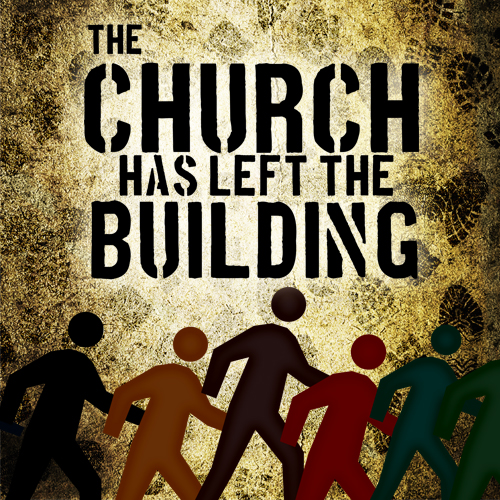
One of the great things we heard about at the Change the World conference was something that a minister in NC does.
Some Sundays, the congregation comes in for a worship service only to be given a map and told to leave. The minister sets up something out in the community ahead of time, but doesn’t tell anyone. She gives a very short worship service, then they leave, to serve. I think she said the first time, it was picking collard greens for a food pantry.
“Some of them think I’m kinda crazy,” she admitted. Rev Tony burst out, “I think you’re AWESOME!”
Not everyone can do it, of course. Some are infirm, or have little babies. But most do. That first Sunday, 190 people came to church, and 120 went out to serve. Not a bad percentage, in my estimation.
Harvey Carey talks about how many churches just stay in the huddle all the time. Says it would be like going to a football game, and the players just huddle …. then go inside at the half … then come out and huddle some more.
It’s time we leave the huddle and get into the game.
CTW Conf: Get Off Your Assets
Break Out Session: Get Off Your Assets, Discovering and Deploying Assets in Your Neighborhood
“A good neighbor is one who steps outside of their personal boundaries, lends a helping hand, and shares their gifts unconditionally with any and everyone.”
In this workshop, the speaker pointed out that focusing on the needs of a community sets up a model where the church provides services to meet those needs, leading to the creation of consumers where programs = the answer.
Instead, we should map out the assets of the community. Parks, charities, local institutions. This sets up a model of working with community members:
Assets (What is there) à Connections (for contributions) à Citizens (People = the Answer)
When they did this, they used Google maps to map out the community assets, including the HOA president and people who might be block representatives. They went door to door in the neighborhood, saying, “Hi, we just wanted to see how we can be better neighbors.” People would talk to them, sometimes for half an hour, about their concerns.
Then,
Discover What People Care Enough About to Act On
If the people of the community don’t care enough to get involved around a particular transformation, then it’s not that important.
Mobilize people around what they care about
Teams are a necessary way of getting more done. In addition, they will support and encourage each other, creating relationships along the way.
Focus on The roles of programs and people
Community groups, politicians, business owners – all can work together.
Last, Lead by stepping back
The challenge is timing. We must be patient. “I know we could get this program done tomorrow. But if we engage the neighbors and it takes 6 months, that’s even better. Because we’ve created relationships so that we will continue to working together. “ Let those in the community lead. “Follow me, I’m right behind you.” What is the felt need amongst my community vs. what I want.
This is not a quick fix. One person says, “If you can’t commit to a neighborhood for 15 years, don’t bother. It takes at least that long.”
Day 1: Change the World Conference
After a short, energetic worship service, Mike Slaughter takes the stage. He has been the minister of Ginghamsburg Church for 33 years. Dayton is one of the 10 fastest dying towns in America. – 64% of resources at the Ginghamsburg church go back out into the community. Slaughter immediately emphasizes, “Movements aren’t made in a moment.”
He asks this giant audience, many of whom are pastors: Do you want to grow a church or grow a movement?
He describes the difference between Committees vs. Teams –
· A committee approves.
· A team creates and empowers.
· Teams energize; committees de-energize.
– The pastor empowers Teams; Teams help mobilize the congregation to move into the community.
Every missional leader has a vision, a plan, and a persistent, repetitive practice. Picture, plan, practice.
Picture: without a vision, the people perish.
“Leadership is based on the ability to see future possibilities and shape the environment to facilitate desired outcomes.” – George Barna
People commit to following compelling visions, not church programs. People want to give themselves to a great purpose.
Vision: Vision is a leader’s mental image that conveys where an organization needs to be in the future. It addresses why, what, how. Vision is primarily right brained and passionate. It evokes emotion. Goal setting and strategy development are the result of vision. The process doesn’t precede vision. (We’ve got it backwards in the church.)
4 Characteristics of Vision
Clarity
Urgency
Importance
Size
Slaughter provides an example. Their church created a sustainable agricultural program in Darfur. Why? Their answer was compelling – “If we don’t, up to 1 million people will die.”
Be aware of the limitations of your vision. “Your picture becomes your ceiling.”
What is essential for you, as a leader: you need time to dream God’s dreams. You need to hear uniquely what God wants to do through you.
You need a robust devotional life to sustain you. For Slaughter – every morning, he has a block of time for meditating, journaling, working through the common prayer book. You also need time for personal study: that allows you to future-cast.
The world is changing and one thing we have to think about is church buildings. Brick = too expensive. We need to get out of building campaigns and get into missional campaigns.
“I’m not a big fan of mega-churches,” says Slaughter, perhaps surprising some people, as Ginghamsburg is one of the largest congregations in North America. “I don’t believe it’s the model of the future.”
As gas gets more expensive, people won’t want to drive far.
Neighborhood church model.
Restarting small neighborhood churches.
Rebirth of urban church. 84% of all Americans live in urban areas.
Methodists: 74% of churches are located where 16% of the population is.
Need to think about house churches.
Understand media.
50 hours a week = avg person connected to media.
Casting Vision “Effective leadership is about painting a picture of God’s future.”
Learn how to come up with sound-bites.
Examples of sound-bites at Ginghamsburg:
“Serve.” At his church: “If you are a member here, you have to serve.” No matter your prestige.
“We’re the only hands and feet God haves.” We’re the only bank account God has.
Repetition of pithy message.
People give their life to a compelling vision, not church programs.
How do I prevent compassion fatigue?
At a certain point, it can become just numbers. People can get tired of sacrificing. ¼ children live below the poverty line in Dayton, OH. This Christmas, half of the Christmas offering will go to Sudan, ½ will go to sustainable missions in Dayton. (Also gives fresh vision for church.)
Testimonies and videos are absolutely essential. That’s how people get their information now. Before, people would say “I read…” Now they say: “I saw….”
Storytelling is powerful. Pictures. Video. Sound, the music under a video, evokes emotion.
REPETITION.
Strategy is about having two things:
· Clearly defined mission statement.
· Clearly defined plan.
Have a strong, simple mission. Example: The Methodist mission is “To make disciples of Jesus Christ for the transformation of the world.”
It’s not about getting people in, it’s about getting people OUT.
Strategy: To involve people in the life celebration.
Every morning, take time to align thinking with God’s kingdom, not world thinking.
Cycle: Cell – Call – Celebration
Celebration includes:
Personal devotion/Corporate worship.
Small groups
Call – serve out of your passion and gift mix
You can’t join Ginghamsburg without going through training and an interview. You have to commit to be in celebration, in a small group, to serve, and to tithe. It’s fine to not join. They have 1200 members with an average 5000 people in 4-5 services each Sunday. But if you do join, membership means something. It’s a big commitment.
A pastor needs a strategic plan for each year. How you find it: Make it as though you will only live for one year. (This gives you permission to NOT do a lot of things.) If you knew you were going to die in a year, what would you do different in your ministry this year?
Practice “Fruitfulness is the result of long, sustained, persistent action in the same direction.” Repetition of message. Over and over and over.
For those doing missional ministry – both lay and clergy – you need spiritual, physical, and relational (family, marriage, friends) disciplines.
Numbers matter.
“We must measure results and not activity.” It’s not enough to know how many people are in the GED program – how many graduate? How many move on to college?
Numbers matter. How many people are in cell groups? How many new groups did we start? Name a curriculum, have ongoing training for leaders.
To join Ginghamsburg, you go through “Core 3.” 3 different classes: Christianity 101; Discovering Your Strengths; Cell-Start (experiencing a cell group)
All groups right now are preparing for “Christmas is not your birthday.” The majority of groups meet every 2 weeks.
There is a high level of commitment among the small group leaders. Slaughter encourages anyone in the church who has any kind of vision to go for it.
They do not have committees at Ginghamsburg. They have 1 board of 12 people. 4/4/4: HR, Trustees, Finance
People are not looking for meetings, they’re looking for meaning.
When you free people, ministry goes way beyond anything you could imagine.
The Red Pill Brethren are in the sky
Coming from different cities, we’re all on our way to O-Hi-O, to the Change the World Missional Church conference.
Speakers include Mike Slaughter, Rudy Rasmus, and Alan Hirsch. We are psyched.
Alan Hirsch is one of the fathers of this movement, authoring many of the books that have held transformational moments for their readers, such as The Shaping of Things to Come.
Mike Slaughter and Rudy Rasmus are two of the folks making missional a reality. I’m personally acquainted with Pastor Rudy, as he went to my seminary and isn’t averse to stopping by and talking to students. His book Touch, was one of those transformational books for me, before I’d ever heard “missional.” This is a guy that is walking the walk. When he was visiting my ethics class, he talked about the fact that about a third of his parishioners are, or were, homeless. They even pay homeless folks to come to church. Sure, they’re hoping that it will effect a transformation in the homeless person’s life. But equally, they feel that the person can help John Smith, driving in from his comfortable life in the suburbs. To stand next to someone, in fellowship, who maybe doesn’t smell so good, or talks to herself, can open a door to the heart. Because if this person is my brother here, at church, then he is also my brother when I leave this place. When I’m driving downtown and see him standing on a corner, he is my brother, then, too.
This is one of the hearts of missionalism that speaks to me. It says we’re all walking along a path, hopefully toward becoming part of beloved community. All of us have areas of brokenness, all of us can move toward wholeness. All of us have value, all of us can work toward creating and realizing Kindom.
-Sister Jo
No one can say: ‘Since I’m not called to be a missionary, I do not have to evangelize my friends and neighbors.’ There is no difference, in spiritual terms, between a missionary witnessing in his home town and a missionary witnessing in Katmandu, Nepal. We are all called to go—even if it is only to the next room, or the next block.
Thomas Hale, On Being a Missionary, p 6
Links to diverse missional communities and resources
Missional Links
411: NYC CHURCH PLANT LAYS THE GROUNDWORK IN PRAYER
…To that strategic prayer cover, the 411 team added intentional service in the community. It started simply, with water and granola bars or Krispy Kreme donuts and Starbucks handed out in sub-zero weather as busy New Yorkers were hustling to work. The group’s service expanded from handing out bubbles to kids in the park to weeding the now-famous Daffodil Hill where bodies were brought for identificaiton after the 9/11 attacks.
In a display of “post-modern day foot-washing,” the 411 crew even scrubbed rubber mats where kids play in a neglected park and cleaned bathrooms that were too nasty to open before. The group’s black T-shirts – which have the appearance of “stage crew” apparel among the area’s artist community – got to be so well-known that New Yorkers started asking where the 411 group was serving that day, what they were giving away or if someone would pray for them.
 Red Pill Brethren